
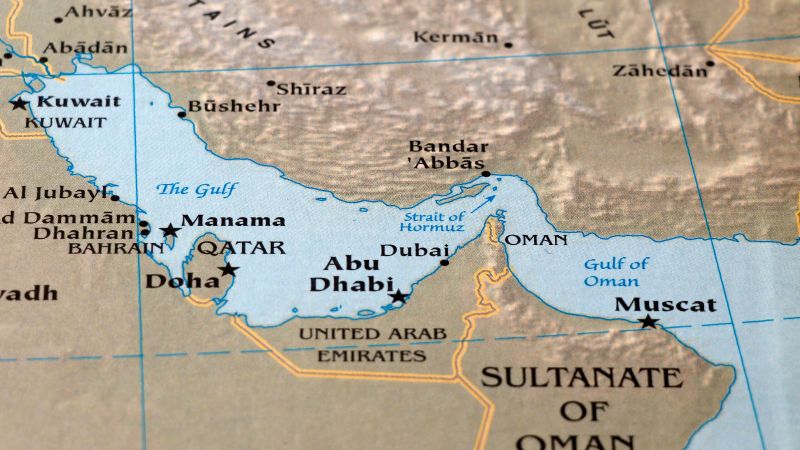
The conflict in the Middle East has dominated the headlines and the global markets. Below, you can find links to a variety of articles from Rabobank’s experts analysts on the effects of the conflict and what to expect moving forward.
Rabobank Publications
War Stresses Fertilizer Outlook
April 13 — Global fertilizer markets ended Q1 2026 under severe strain. The market environment is now characterized by tight availability, sharply higher fertilizer prices, and elevated volatility across major fertilizer products.
Monthly Outlook: War and Peace
April 1 — If ‘a week is a long time in politics’ then a month is an eternity in geopolitics. Since February 28, the Iran war has become the fulcrum around which global markets, the global economy, and the geopolitical architecture all now conflate. For now, we are sticking to our geopolitical base-case scenario of the war being over in 2-3 weeks on largely US terms, then a slow return to normal for energy… but not for geopolitics: the world won’t look the same on the other side of this whether the US wins or loses.
Global outlook: Energy shock slows economic growth around the globe
March 27 — War in the Middle East has upended global energy markets. The most important geopolitical blow is the closure of the Strait of Hormuz, through which one fifth of all oil globally and one fifth of all LNG is normally transported. This has triggered an energy shock that affects the entire global economy.
More persistent inflation
March 25 — As the war with Iran continues and critical energy infrastructure in the Gulf region has been damaged, we have updated our macroeconomic forecasts for the US
Oil Shock: A Catalyst for Sugar Prices?
March 24 — At the time of writing on March 24, Brent crude is hovering around the USD 100/bbl mark, while ICE May-26 Sugar #11 is trading close to USc 15.50/lb. It is unsurprising, therefore, that the mechanisms that link together the crude oil market and the sugar market have come into focus; thus, the purpose of this note is twofold: to explain how the two markets are linked via Brazilian fuel markets, and to then assess how the conflict-driven increase in crude oil prices informs the outlook for the ICE Sugar #11 market.
Energy at the Edge
March 23 — Our baseline remains that both Washington and Tehran are pursuing ‘escalate-to-deescalate’ strategies, and – barring a political or military workaround to the U.S. deadline – fighting will continue into mid-April, increasingly concentrated around Hormuz. While a slow reopening of the Strait remains the central case, the probability of a major fat‑tail outcome has risen sharply, growing regional involvement, and the risk that Tehran or great‑power backers prolong the crisis. We also see risk of further attacks on energy infrastructure in the Gulf inflicting lasting supply curtailments, posing significant upside price risk to our natural gas and crude oil views.
Energy Insights of the Week
March 20 — Upside risks and uncertainty remain the game. Until there is a meaningful shift in tanker transits through the Strait of Hormuz, oil & refined products as well as natural gas prices will continue to rise.
Iran and the Strait of Hormuz 2.0
March 12 — The disruption in the Strait of Hormuz has triggered a cascade of pressures across global energy systems, leaving oil markets tight and gas markets severely constrained, with rerouting options offering only partial relief. We now expect oil and refined product markets to remain firmer for longer than previously anticipated, with a gradual easing later in the year and a softer trajectory emerging over the medium term. Gas markets, meanwhile, face renewed upward pressure as delays to LNG supply growth erase the expected surplus and push the market into deficit into next year. In contrast, carbon prices are likely to soften as elevated energy costs curb industrial activity and limit emissions growth.
Conflict in the Middle East: Impact on global food and agribusiness
March 12 — Disruptions in the Middle East are driving volatility in energy, inputs, and trade, with far reaching consequences for global food systems.
The impact of the war with Iran for the US economy
March 9 — The war with Iran introduces another negative supply shock to the US economy.
Global fertilizer markets feel impact of conflict in the Middle East
March 6 — The current conflict in the Middle East is disrupting global fertilizer markets, raising prices and tightening supply across global agriculture.
Another supply shock for the Fed
March 5 — While the Fed is still waiting for the effects of the negative supply shock from the tariffs to subside, a second supply shock – from higher oil prices – is expected to hit the US economy.
The impact of the Middle-East conflict on the European economy
March 5 — The rapid escalation in the Middle East has driven a sharp but contained rise in energy and logistics risks, feeding into European inflation and supply‑chain concerns. Brent has surged and European gas prices have nearly doubled, with future moves tied to the conflict. Europe remains highly exposed because a large share of global oil and LNG flows depends on the Strait of Hormuz. Using model‑based baseline and risk scenarios, we assess both temporary shocks and prolonged disruptions. A brief disruption causes only a temporary inflation bump, but prolonged outages could keep prices high and delay Europe’s recovery into 2028.
Rabobank in the News
Even if the war in Iran ends soon, the oil market will take months to recover
April 2 — Senior Energy Strategist Joe DeLaura spoke to marketplace on the status of the Strait of Hormuz and what it could mean for markets moving forward.
The Dollar Dilemma
April 1 — Senior Energy Strategist Joe DeLaura was quoted in Global Finance magazine on how companies might cope with volatile energy prices.
The average U.S. gas price is now $4 a gallon. What does that mean for the economy?
March 31 — Senior Energy Strategist Joe DeLaura spoke with National Public Radio in the U.S. about rising gas prices and the potential impact on the U.S. Economy.
Energy expert Joe DeLaura takes your calls on the economic cost of the Iran War
March 14 — Senior Energy Strategist Joe DeLaura talks with British news outlet LBC.