
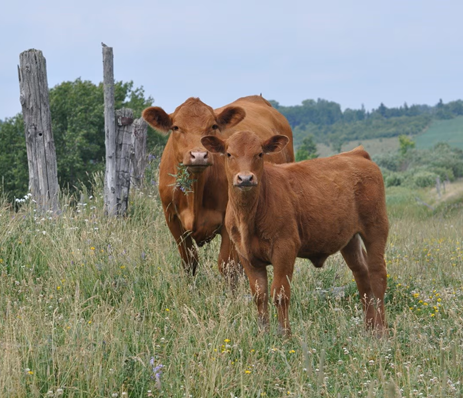
The US cattle cycle usually spans eight to twelve years between inventory lows. The resulting cyclical rebuilding of the US cattle herd gives cow-calf producers an opportunity to make dynamic changes that will shape the cattle industry for the next decade. The pace of the rebuild itself is influenced not just by bred heifer prices on the market but interest rates, operating costs, financial recovery and the weather outlook.
The upcoming rebuild may be different from those in the past. Downstream players in the beef supply chain have a greater interest in sustainability and transparency that upstream producers will need to consider as they make decisions regarding the rebuild of their herds.
When it comes to building back better, there are three strategies incorporating sustainability concerns that producers might consider in order to end up with a reconstituted cattle supply more resilient to market pressures.
- Restoring drought-degraded pasture, rangeland, and forage supply before expanding herds.
- Enhancing the genetic merit of younger herds with value-added traits.
- Capitalizing on emerging sustainability-related programs and technologies.
Improving pasture and rangeland resilience
Strong pasture resources offer flexibility during periods of high input costs and low moisture. Forage inventories function as a tool for grazing, nutritional composition, and stocking density. Data from the Kansas Farm Management Association revealed that from 2017 to 2021 the average pasture cost per cow was USD 166 cheaper than the average non-pasture feed cost.
However, recent extended periods of drought have stressed conditions for producers in multiple parts of the country.
Enhancing herd genetics and monitoring
Herd rebuilding can be an optimal time to breed for improved reproductive and efficiency traits. Productivity can lead to both increased profitability and environmental sustainability.
Capitalizing on emerging sustainability-related programs and technologies.
Programs to incentivize adoption of new practices can help mitigate the upfront cost of adopting new practices within an operation. New technologies to connect efficiency with sustainability through traceability leveraging artificial intelligence, machine learning blockchain and other innovations have promise but need to demonstrate solid value propositions to see broader adoption.
Resilient cattle supply chains can better adapt to price fluctuations, weather extremes, inflation, and rising input costs while remaining viable throughout generations. To achieve this, the sector will require a collaborative systems approach to identify and act on the numerous forces that shape cattle production. With an adaptive, trial-and-error mindset, producers can better navigate the risks associated with cattle production and ultimately reap the long-term benefits of a more productive and sustainable operation.
Report Authors
Charlotte Talbott
Animal Agriculture Sustainability Analyst
Disclaimer
This document is meant exclusively for you and does not carry any right of publication or disclosure other than to Coöperatieve Rabobank U.A. (“Rabobank”), registered in Amsterdam. Neither this document nor any of its contents may be distributed, reproduced, or used for any other purpose without the prior written consent of Rabobank. The information in this document reflects prevailing market conditions and our judgement as of this date, all of which may be subject to change. This document is based on public information. The information and opinions contained in this document have been compiled or derived from sources believed to be reliable; however, Rabobank does not guarantee the correctness or completeness of this document, and does not accept any liability in this respect. The information and opinions contained in this document are indicative and for discussion purposes only. No rights may be derived from any potential offers, transactions, commercial ideas, et cetera contained in this document. This document does not constitute an offer, invitation, or recommendation.
This document shall not form the basis of, or cannot be relied upon in connection with, any contract or commitment whatsoever. The information in this document is not intended, and may not be understood, as an advice (including, without limitation, an advice within the meaning of article 1:1 and article 4:23 of the Dutch Financial Supervision Act). This document is governed by Dutch law. The competent court in Amsterdam, the Netherlands has exclusive jurisdiction to settle any dispute which may arise out of, or in connection with, this document and/or any discussions or negotiations based on it. This report has been published in line with Rabobank’s long-term commitment to international food and agribusiness. It is one of a series of publications undertaken by the global department of RaboResearch Food & Agribusiness.
© 2025 – All rights reserved